
The Milk
Carton Kids
On their seventh studio album, Lost Cause Lover Fool (due April 24 on Far Cry/Thirty Tigers), The Milk Carton Kids offer nine songs that, more than ever, invite listeners to lean in close and linger inside the small moments the record quietly magnifies.
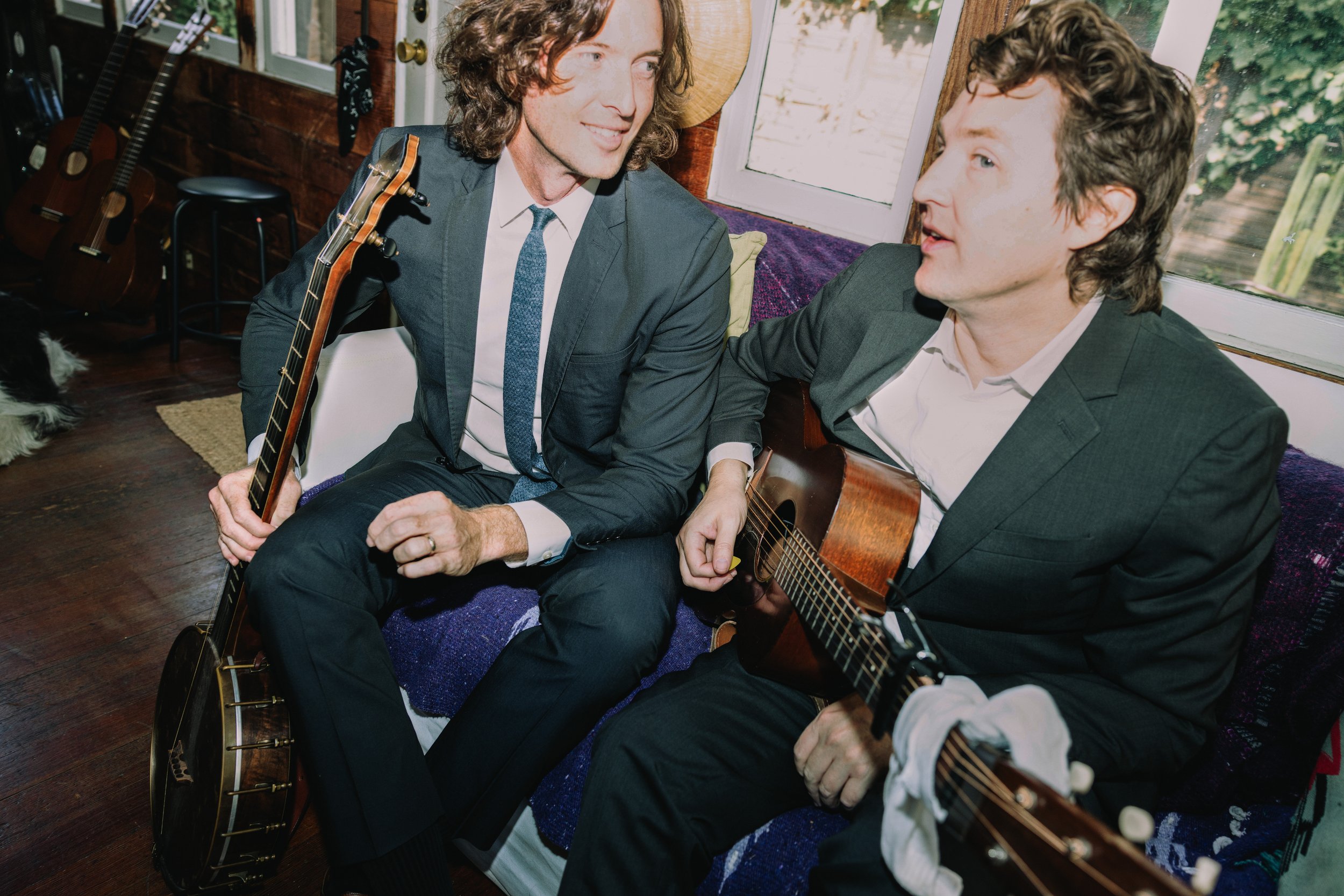
When Los Angeles–based singer-songwriters Kenneth Pattengale and Joey Ryan first emerged in 2011, they did so with a sound as unassuming as their “marketing” plan. They recorded their ten-song debut, Prologue, with just their two guitars and two voices. They posted it online as a free download, sending the link to friends via email. Even amidst the foot stomps and hand claps carrying Folk into the mainstream, hundreds of thousands of people managed to find Prologue in that first year. From the beginning, The Milk Carton Kids were more interested in precision than volume.
“We were very conscious back then of trying to make our two voices sound like one thing,” Ryan recalls. “And we wanted our guitars to sound like one instrument too.”
That instinct toward unity and understatement became the foundation of a career that steadily expanded without ever losing its center. Fast-forward fifteen years, through chaotic world events, a global pandemic and its aftermath. Through Ryan’s two children and Pattengale’s move to Nashville then back to LA, his bout with cancer. The pair went from darlings of the Americana Music Association Festival to hosting its annual awards show at Nashville’s Ryman Auditorium. They started their own Sad Songs Summer Camp, helping songwriters dig deeper and darker through an intense workshopping process. They also founded the Los Angeles Folk Festival, spotlighting musicians and comedians in the broader Folk community. (In its first two years, the festival has featured performances by Emmylou Harris, Waxahatchee, Sierra Ferrell, Willie Watson, Valerie June, and more.)
-
Along the way, the duo has received four Grammy nominations and their songs have been featured in numerous film and TV projects, from Gus Van Zandt’s Promised Land to Tina Fey’s goofball comedy series Girls 5Eva. They’ve collaborated with a who’s who of players from Joe Henry and Rosanne Cash to Sara Bareilles and Josh Ritter.
Through all of it, The Milk Carton Kids have remained committed to a deceptively simple idea: music can help turn down the volume on a chaotic world and make room for what matters most.
Lost Cause Lover Fool is the clearest distillation of that idea yet. With roots-leaning arrangements and a deep trust in space, the album expands the duo’s signature minimalist sound while somehow making it even more focused.
“This album is, at its core, a collection of songs about transformation,” Pattengale explains. “About the shifting terrain of consciousness and the stories we build to understand who we’ve been, who we are, and who we’re becoming. Each song takes a single moment, sometimes examined with microscopic closeness and sometimes viewed from a great distance, and lets it expand until it becomes an entire world. By enlarging small feelings until they’re inhabitable, the record looks for eternity not in the sweeping or monumental, but in the intimate specifics that usually pass too quickly to notice.”
The record opens with “Blue Water,” led by the lonesome pluck of a banjo. Handled with restraint, the instrument feels less like traditional bluegrass and more like morning light cast across a stretch of grass. Lyrically, the song captures a fleeting image: a man walking along a river, thinking about the child who once lay on his chest and now shares his worried mind. It’s a moment so slight it could easily be dismissed, except that it holds an emotion as universal as it is brief.
That instinct to pause, to hover, to honor passing thoughts runs through the entire album. The songs on Lost Cause Lover Fool live in interior spaces, where the act of noticing becomes a kind of devotion.
The title track drifts through an unsettled internal monologue, its narrator caught between confidence and doubt as memory and worry begin to resemble one another. “Sometimes I’m tough / Sometimes I’m not enough / Sometimes I think of you,” Pattengale sings, as the song circles its thoughts without resolving them. “A Friend Like You” recalls a road trip through Texas and New Mexico and the particular ache of sharing space with someone when the most important things remain unspoken. “Blinded and Smiling” compresses joy, love, and mortality into the instant it takes to snap a photograph, reckoning with how quickly even the happiest moments slip into the past.
“Young Love” closes the album by wondering what ever became of a long-ago companion. As melancholy as that question might be, in The Milk Carton Kids’ hands it feels quietly illuminating, as though the riverside walk where the album began has led back into a clearing. The past may be painful to revisit, but letting the mind wander through it can also bring perspective and grace.
Musically, the duo continues the subtle expansion of their palette. There’s banjo, drums, choral backing vocals, all pulling toward a unified center. Even as their arrangements grow richer, the goal remains the same.
“As we're adding more and more layers,” Ryan says, “we're still drawn to the idea of a sound where the pieces give themselves up to the greater whole.”
At just nine songs, Lost Cause Lover Fool resists excess by design. Its brevity is not a limitation but a philosophy. A quiet argument for mindfulness, economy, and attention. In an age of constant noise and endless content, The Milk Carton Kids make a case for staying small, staying present, and listening closely. It’s what they’ve always done.
Lost Cause Lover Fool doesn’t strain for relevance or make a spectacle of itself. It simply pauses long enough for the listener to step inside. It reminds us, gently but insistently, that the smallest moments are often the ones that last.

2026 Featured Guest Counselors
Steve Poltz
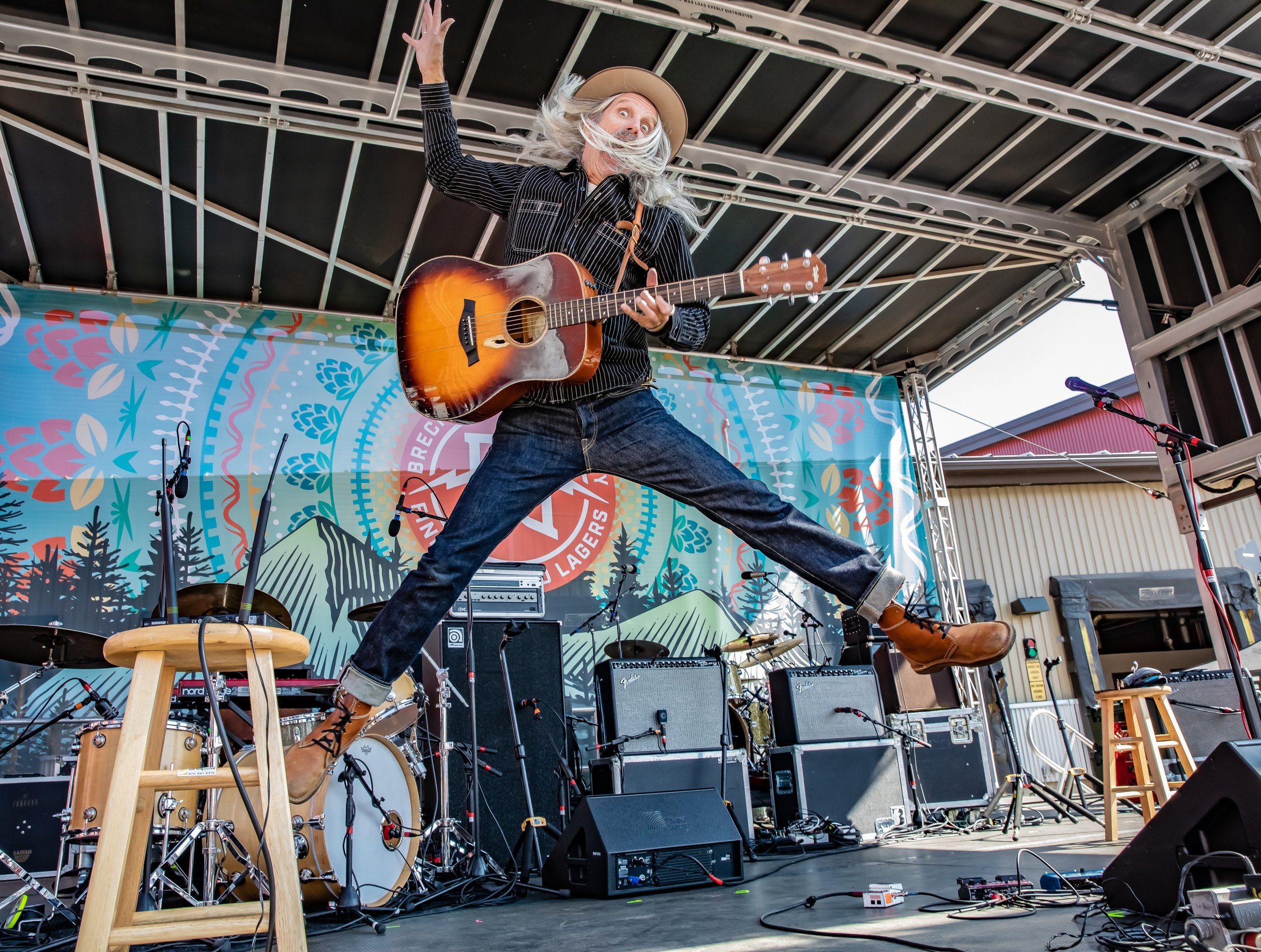
Some people start life with a plan. Not Steve. He opens himself up to the universe in a way most of us will never be loose enough to achieve, and the universe responds with a wink, a seemingly bottomless well of inspiration, and the talent to truly connect with an audience. While 2021 could have found him adrift, faced with a tour moratorium the likes of which he hadn’t experienced in decades, it opened a door — literally, his friend Oliver Wood of The Wood Brother’s door — to creating an exuberant, thoughtful batch of songs that celebrate life in all of its stages.
The resulting album is called Stardust & Satellites [Red House / Compass Records].
-
“I just make stuff up,” he exclaims, quipping, “it sounded good to say that.” Steve is the sort of prolific writer and collaborator who downplays what seems like a non-stop geyser of creativity. “I have no rhyme or reason for what I do. It’s all magic. I go by instinct. It just felt right, so I went with it.”
The “it” in question is one of those serendipitous situations that were created by the pandemic. Steve, a road dog and performance junkie who regularly spends 300+ days a year on the road, bringing it to the people, should’ve been on tour last year. Esteemed Nashville roots rockers The Wood Brothers (Chris Wood being a former neighbor to Steve), also should’ve been on tour. Stuck in Nashville, Steve often joined the Wood Brothers for outdoor socially distant hangs, and, on a whim, decided to record one song with Oliver Wood and Jano Rix.
They cut “Frenemy,” a wistful, “keep your friends close and your enemies even closer” song that made it clear to all involved that they’d stumbled onto something special. With no studio clock ticking, no schedule or deadlines to meet, the companionship and ability to collaborate with like-minded musicians added a joyful diversion to what was a boring-ass year. Musically, the sky was the limit, and the group of musicians and friends embarked on a musical experience that found cast and crew reaching toward the stratosphere with Stardust & Satellites, which Oliver and Jano Rix of The Wood Brothers produced.
The album begins with the lithe fingerpicking of “Wrong Town,” an anthem summing up the life of an itinerant songwriter/performer, where he declares, “The truth is I have no plan at all,” going on to cite Emmylou Harris and Don Was as his style icons. It’s a “pleased to meet me” sort of song, and it was written to greet the audience at the Telluride Bluegrass Festival in 2019. “I wanted to write an opening song,” Steve recalls.“I sat down with fellow Nashville songwriter Anthony da Costa, and ‘Wrong Town’ just appeared.”
But even gonzo guys have their moments where the cycle of life seems to be almost too much to bear. “Conveyor Belt” is a heartfelt song, a song that could only be written at a certain point in one’s life, and that point is when you’re saying goodbye to your parents and addressing your own mortality. Steve explains, "My mom passed away, and then a few years later my dad crossed over. I started thinking that I was next on the conveyor belt in a factory on the wheel of time. Next thing I know, I grabbed my guitar and this song appeared to me like a gift. It didn’t exist and then voila, there it was. I feel lucky to be a conduit."
The song is written over a gentle, repetitive melody that moves along with the inevitability of ye old sands of time. For fans, it’s a different side of Steve, using a voice and a new solemnity for a song that touches a universal nerve.
On one of the last nights of the recording sessions, Steve locked himself up in his writing room and within an hour, had conjured the catchy, effervescent “Can O’ Pop,” destined to be the radio single.
“Jano from The Wood Brothers was leaving the studio, and I asked him to give me a beat, and I told him I’d write a song with the beat he gave me,” recalls Steve. The exuberant, syncopated groove seems to bubble up as Steve admits, in his best mid-period Dylan, “I want to feel the fizzy rhythm with you.”
“Hey, Everyone loves a can of pop” he cracks.
Among other highlights, “It’s Baseball Season” seesaws on a sunny acoustic guitar as he pays homage to America’s favorite pastime. Poltz is a true fan, and the song’s laid-back, relaxed vibe speaks of carefree days at the ballpark. Steve even pays tribute to legendary baseball announcer Ernie Harwell.
With a cult following that includes fellow musicians, regular folks and festival goers who stumble onto his performances, there’s no common denominator to Steve’s fans. Born in Halifax, Nova Scotia and raised in San Diego, CA Steve toured and recorded with San Diego cult favorites The Rugburns (they still play annual sold-out reunion shows). But it was through his creative partnership with Jewel that he vaulted into the national spotlight; co-writing her multiplatinum Billboard Hot 100-busting smash, “You Were Meant For Me,” and continues to work with her to this day.
Over the years, the Nashville-based troubadour has built a fascinating solo catalog, earmarked by his debut, One Left Shoe, Dreamhouse, Folk Singer, and 2019’s Shine On. No Depression crowned him, "A sardonic provocateur with a lighthearted acoustic-driven wit, suggesting at times a sunnier, less psychedelic Todd Snider, or maybe a less wan, washed Jackson Brown,” while the Associated Press dubbed him "part busker, part Iggy Pop and part Robin Williams, a freewheeling folkie with a quick wit and big heart.”
Among other collaborations, GRAMMY-winning bluegrass phenom Billy Strings tapped him to co-write “Leaders” on 2021’s Renewal and he’s co-written with Molly Tuttle, Sierra Hull, Nicki Bluhm, Oliver Wood and even Mojo Nixon.
He’s resumed his tour schedule, and when he comes to your town, he’ll say, as he does every night, “This is the best show I’ve ever played.” And hell, maybe it just is.
Ultimately, Steve never needed a plan.
He’s something of a natural, after all.
Maya de Vitry
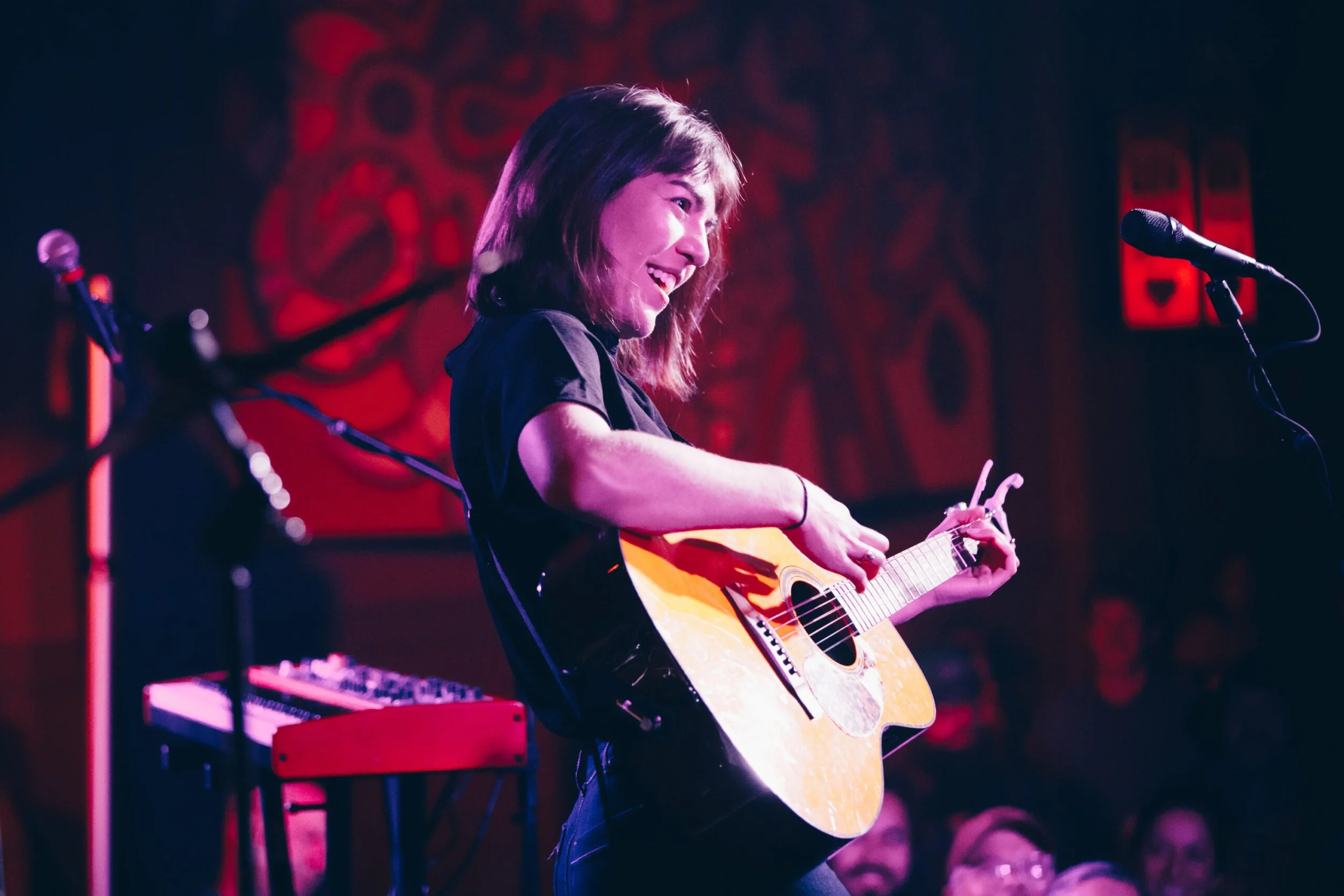
Originally from Lancaster, PA, Maya de Vitry is a Nashville-based artist whose music blurs the lines of folk, indie rock, and Americana. An admirer of the dedicated song craft of writers like John Prine, Gillian Welch, and Townes Van Zandt — and of the stirring vocals of artists like Bonnie Raitt and Nina Simone — Maya de Vitry’s music invites listeners into a space of openness and connection.
After a formative chapter with the roots-Americana trio The Stray Birds, she launched her solo career with the 2019 album Adaptations, earning praise from Rolling Stone Country, NPR Music, and No Depression. Since then, she has built a devoted following, drawn to both her recordings and her powerful live performances. Known for her magnetic voice and hard-won sense of purpose, Maya has toured in North America and Europe, supporting artists like The Wood Brothers, Aoife O’Donovan, John Craigie, and Mighty Poplar. Her songs have also appeared on albums by Molly Tuttle, Lindsay Lou, and Steve Poltz, and her skills as a multi-instrumentalist and harmony singer have contributed to many Nashville recordings.
-
Her fourth full-length release in just six years, The Only Moment, is a 10-track testament to personal reinvention and creative growth. “I’m not just making different music now. It feels like I’m breathing in a different atmosphere,” she reflects on her evolution from The Stray Birds to her solo journey. Her sense of liberation is especially apparent in her live shows, which have become a space for spontaneity, peace, and freedom, often woven together with personal stories that connect the songs. “After the show, I just want to know if I’ve helped you feel more free,” Maya says. “That’s my unspoken agreement—to myself, my bandmates, and everyone in the audience.”
Despite a seemingly relentless creative pace, the recording of The Only Moment—produced by Maya and mixed by Grammy-winning engineer Justin Francis (Madison Cunningham)—was deliberate and unhurried. “It was like making a long-exposure photograph, but with music,” Maya explains, having allowed the songs to breathe over the course of nearly three years. “I shelved this record for months at a time, and each time I came back to it, I heard new possibilities. In today’s music industry, there’s pressure to share everything, to turn our process into ‘content.’ But I treasured keeping this record to myself and letting the songs simmer.”
Vera Sola
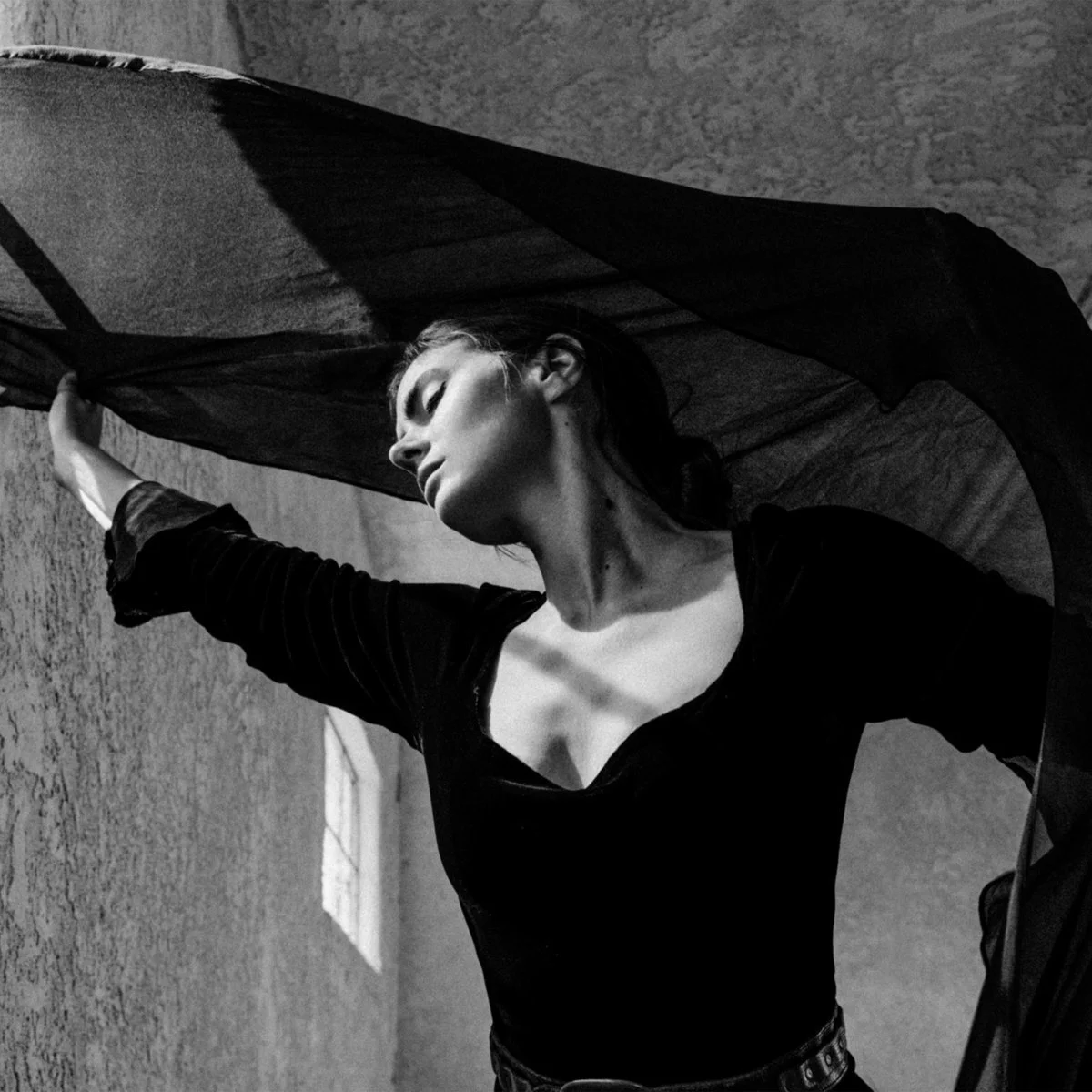
The American/Canadian poet, vocalist and multi-instrumentalist Vera Sola is hard to pin down. She’s been alternately cast as the ‘lost love child of Leonard Cohen and Nancy Sinatra,’ ‘Nick Cave in the role of Staggerlee,’ ‘Patsy Cline fronting a minimalist Warpaint’ and ‘PJ Harvey at her most irate, teeth-bared.’ But none of that really paints the full picture. With a twisted, break-neck finger-picking style, haunting vibrato and ability to move her voice from a guttural howl to a whisper-soft stutter, she shatters genre and seems to bend time.
Her albums have been met with widespread praise, but Vera is still best known for her hypnotic stage presence. In the words of Loud and Quiet magazine, she’s like “a Westworld android gone rogue; a living anachronism, capable of both run-of-the-mill stage banter and of occupying the characters of her songs with full force, moving as if possessed by them as she performs.” Sophomore album Peacemaker is out now on City Slang Records.

The Mammals
(the duo)
The Mammals are folksingers Ruth Ungar, Mike Merenda, and a cohort of compelling collaborators who form a touring quintet on the fiddle, banjo, guitar, organ, bass, and drums. Over the past 20 years they have quietly composed a canon of original songs (“some of the best songwriting of their generation.” -LA Times) that both reflect our culture and offer a vision of how the world might yet be. “These days we sing about what we’re for over what we’re against,” says songwriter, Mike Merenda, and what they're for is "nothing short of sublime” according to Americana UK.
A rough and tumble decade in the 00's forged The Mammals identity as "subversive acoustic traditionalists” (Boston Globe) or a "party band with a conscience." Re-emerging in 2017 from a hibernation period during-which the band's founders explored new songwriting terrain, The Mammals “don’t suffer from multiple genre syndrome, they celebrate it as if gleefully aware that the sound barriers separating old-timey music, vintage pop and contemporary folk are as permeable as cotton” (Washington Post). Their latest album, Nonet, "marshalls the defiant spirit needed to heal a damaged world" (No Depression). In 2023 they released a series of singles recorded at their own Humble Abode Music, as well as issuing bonus material from 2020’s landmark album Nonet. A new album is slated for late summer 2025.
-
Ruth is the daughter of legendary fiddler, Jay Ungar, composer of the storied “Ashokan Farewell.” You can catch The Mammals semi-annually at The Hoot, a folk festival they curate and produce at The Ashokan Center in Olivebridge, NY.
“Hailed by many as Americana trailblazers and exuding togetherness on stage, [The Mammals] are also gently-mannered activists with well-crafted songs that successfully ask potent questions and raise issues to probe how we can improve the planet. They deliver their material persuasively and in an eloquent manner with enjoyment of their music underpinning the approach overall. The music is the motivator throughout.”
"In the vanguard of today's vibrant folk revival" - PopMatters
“One of New York State’s finest treasures.” - Americana UK
“Some of the best songwriting of their generation.” - LA Times
“A national treasure.” - Anais Mitchell
"Some of the best folk-rock music you will ever hear.” - TapeOp
“These two will shatter any preconceived stereotypical notions of what it means to be a folk musician.” - Coastal Journal
“Nonet marshals the defiant spirit needed to heal a damaged world” - No Depression
“The Mammals tell stories that are at once topical and timeless, bearing a message of hope
and empowerment with a modern string-band sound.” - Freshgrass Festival
Jason Cupp
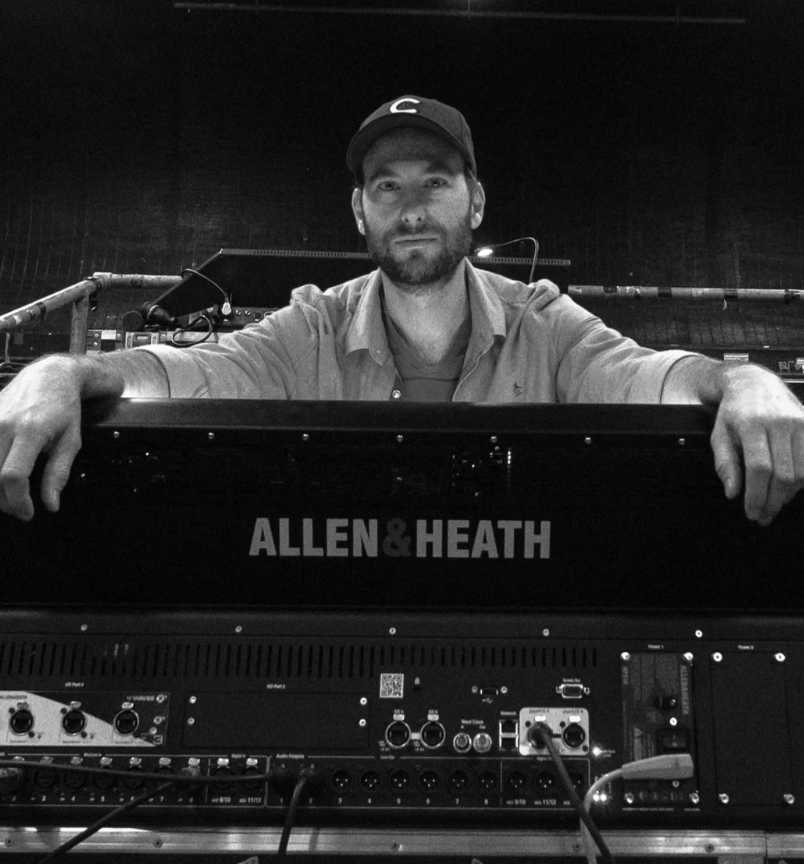
An experienced, well-respected producer, engineer, and mixer, Jason Cupp has worked over 20 years in the music industry, for a long list of successful artists and bands, including American Football, Good Old War, The Elected, Jon Brion, John Paul White, Maps & Atlases, Anthony Green, Dispatch, Rx Bandits, and Finch. His most recent credits as a mixer can be found on recordings by Vera Sola, Into it. Over it and Tim Kasher. Outside of his mixing studio, Jason can be found touring as the front of house engineer for The Milk Carton Kids.
Although Cupp has recorded in some of the best studios in the world, including Abbey Road, Fame, The Village, and Indigo Ranch, Cupp’s Master Class is designed to encompass techniques for home studio setup and use. For Cupp, working in the comfort of a home studio offers boundary stretching sonic benefits, and opportunities for innovative production. Additional topics will include mic selection, EQ, compression, and effects, as well as discussing recording, production, and mixing tips for home recordings.